
Democracy and Doctrine
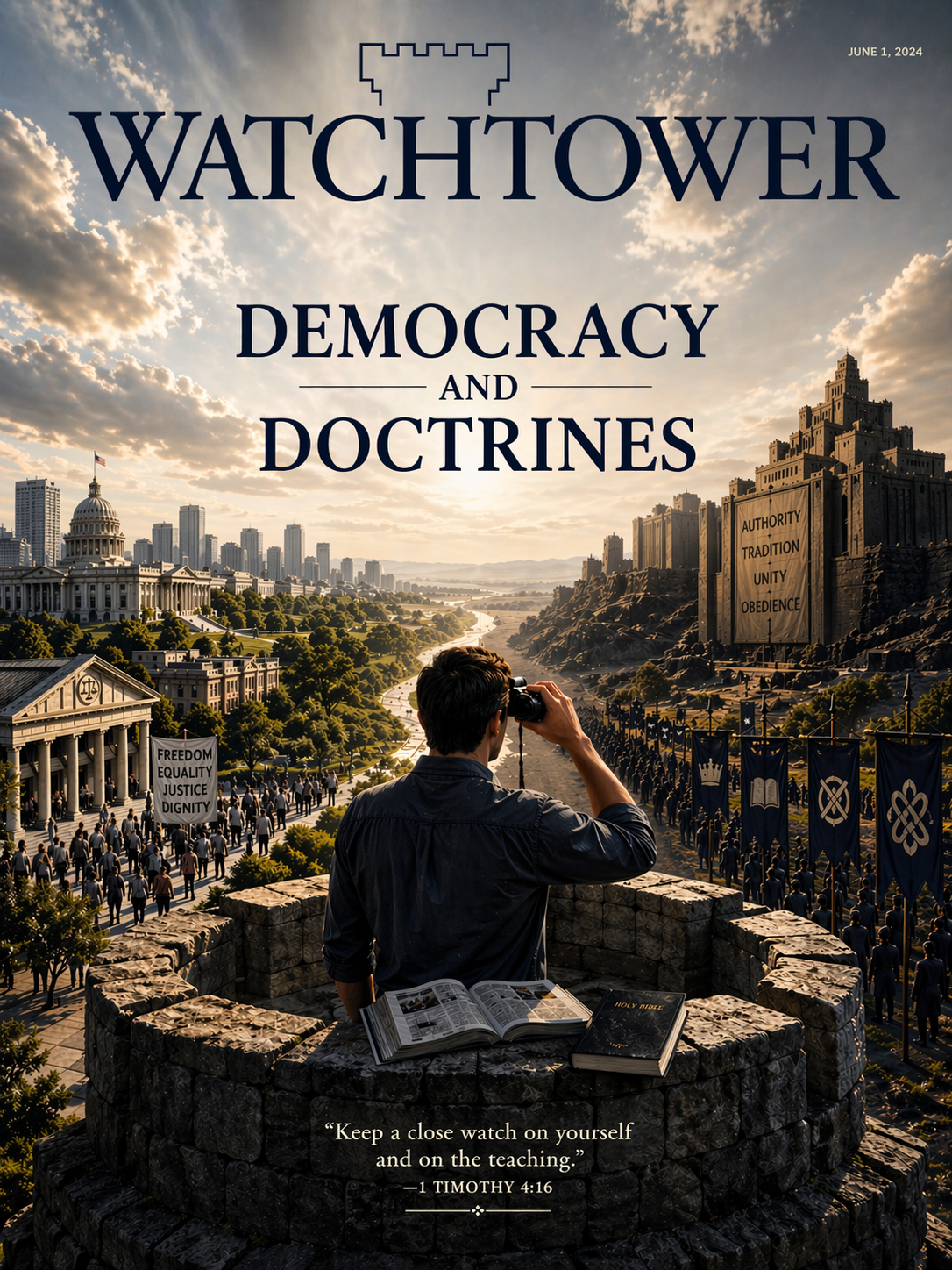
Democracy and doctrine live in permanent tension because they answer different questions. Democracy asks who gets to decide. Doctrine asks what is already considered true. One is procedural, the other foundational. One counts voices, the other limits what voices may legitimately say.
A democracy without any doctrine becomes unstable. It may have elections, parliaments, and speeches, yet lack a shared grammar of reality. In that vacuum, every impulse can present itself as justice, every slogan as policy, every appetite as right. Institutions then become reactive rather than principled. They move with noise, outrage, and short cycles of emotion. Procedure survives, but meaning weakens.
Doctrine without democracy creates the opposite danger. When a society treats inherited truths as beyond question and authority as self-justifying, correction becomes difficult. Errors accumulate behind sacred language. Leaders claim legitimacy not through service or consent, but through guardianship of the approved narrative. Stability may exist for a time, yet stagnation often grows beneath it.
Modern states usually operate through hybrids. Even the most secular democracies contain doctrines: constitutionalism, human rights, equality before law, national myths, market assumptions, civic rituals. They may reject religious dogma while preserving ideological dogma. Likewise, societies organized around doctrine often borrow democratic tools: consultation, voting, assemblies, to maintain legitimacy.
The real question is not whether doctrine exists, but whether it is visible, revisable, and proportionate.
Healthy democracies need doctrines that are narrow and explicit: rule of law, peaceful transfer of power, dignity of persons, limits on coercion, institutional accountability. These doctrines protect the arena in which disagreement can happen. They should defend process, not colonize thought.
Unhealthy democracies expand doctrine into lifestyle, speech, identity, and total moral theatre. Then elections remain, but citizens begin to sense that certain conclusions are pre-approved while others are punished socially or professionally. Formal freedom survives while substantive openness contracts.
Likewise, healthy doctrine knows its own limits. It can offer moral orientation, civilizational memory, or transcendent purpose without demanding total obedience in every domain. It can inspire without administering every sentence of life.
The enduring challenge of political order is balance: enough doctrine to hold a society together, enough democracy to correct doctrine when it hardens into error.
When democracies fail, they often drown in fragmentation. When doctrines fail, they often petrify into bureaucracy or fear. Mature societies understand that legitimacy needs both consent and compass.