
When Orange is Black
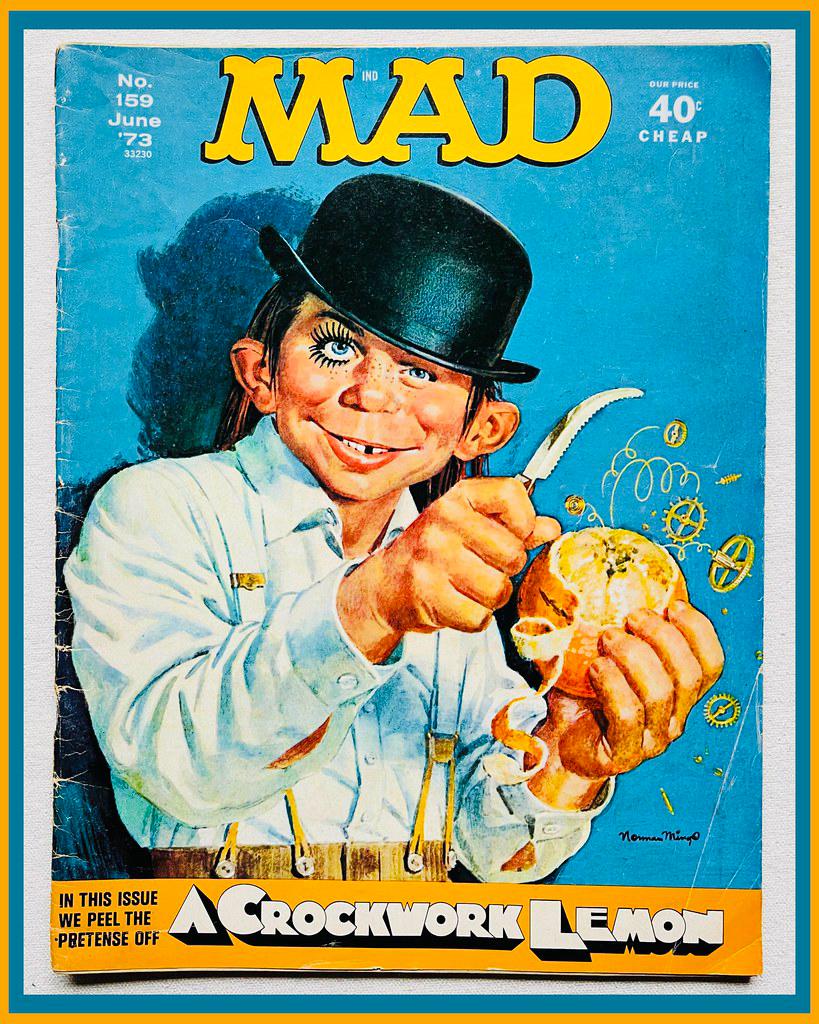
There are moments in history when satire stops functioning as entertainment and begins to operate as a condition of being. When that boundary falls and societies do not become freer or more honest, but more confused. What was once a lens for seeing distortion turns into a habitat in which distortion is lived.
What I would like to address is not a specific failure mode of modern leadership, but the inversion of responsibility, exposure without custody or irony with no yet seen exit.
Madness in leadership is never an ethic or a philosophy of life. It belongs strictly to the domain of entertainment. It functions as diagnostic, but it is not existential. By exaggerating hypocrisy and flattening pretence, madness externalized absurdity so that it could be recognized without being inhabited, so it crucially preserved distance. The reader, the viewer, could laugh, digest, disect, see clearly, and then return to a coherent world. Madness should end when the page is turned.
A society can tolerate madness as spectacle, but it cannot survive madness as norm. When satire is mistaken for a permanent stance, and when irony, mockery, and detachment become identity instead of tools, diagnosis hardens into a lifestyle that will rot faster than it took to bloom..
Every culture has tolerated, and even protected, a marginal figure of inversion: the fool, the clown, the provocateur. This “orange role” historically functioned as a corrective tool. It allowed truth to be spoken obliquely because authority was real and restoration was guaranteed. Inversion, in ancient times, had a ceiling.
In environments where leadership fails, that ceiling disappears. The orange role is no longer marginal; it becomes aspirational and irresponsibility is reframed as authenticity. Disruption is confused with courage, and restraint is mocked as weakness. Seriousness is treated as moral failure or fatigue and what follows does not look like a liberation but as abdication of authority dissolving while pretending to be honest.
This downfall mirrors a deeper structural confusion, historically captured by Saturnalia. In Roman society, Saturnalia was a ritualized inversion of order: masters served slaves, norms were suspended, excess was permitted. But it was time-bound, symbolic, and followed by restoration. Saturn still ruled. Order returned precisely because it had never dissapeared.
Some societies, I would say modern, but I will choose contemporary, are experiencing something else entirely: Saturnalia without Saturn. Inversion persists without any authority capable, or willing, to restore balance. What was once a ritual became an operating system, where absurdity became a loyalty test, and discernment penalized, while compliance with nonsense is rewarded. People are not asked whether something is true, but whether they will play along.
Irresponsibility does not remain contained, it becomes leadership vectorized. A leadership that models incoherence, where institutions imitate it, culture absorbs it, and individuals internalize it. Downstream, this is fragmentation: chronic interpersonal conflict, inflation of trauma language, erosion of trust, identity replacing character, and people bleeding psychologically not because truth is spoken, but either because truth is exposed without custodianship, or because lie is the norm through which truth is disfigured.
This danger was captured with unsettling clarity in A Clockwork Orange. The pairing of milk and conditioning, innocence and coercion, revealed a core truth: moral engineering without legitimacy produces compliance, never goodness. Correction imposed without responsibility damages the human fabric it claims to repair. Error mistaken for governance always ends this way.
Peeling pretence is not precisely curiosity, you might call it surgical work. It requires accountability, foresight, and a restore mechanism owned in advance. Not every illusion can be removed safely. Not every truth can be dropped without cost. A society that deconstructs without rebuilding does not restore safely, it risks fractures.
The Watchtower position is neither reactionary nor revolutionary. It is custodial. It insists on boundaries that are essential to civilizational health: entertainment is not ontology that can be used by anyone, playing perception and consciousness space at personal view, for personal gains. Inversion is not identity. Madness is a lens, a looking glass, not a permanent habitat. Saturnalia is a moment, not a mode. The Orange role is bounded, not sovereign, it knows the clockwork and the timeline. Corrective, maybe not in a way you learned how correction works, especially if your education comes from inverted environments.
The world does not suffer from a lack of exposure. It suffers from exposure without responsibility. Orange is corrective, sometimes brutal entertainment. Saturnalia was a ritua. When these are mistaken for permanent conditions of being, order dissolves, not because it was challenged, but because it was never restored.
Leadership is not the art of disruption. It is the discipline of restoration. Any system that turns inverted leadership into ontology will eventually destroy the very people it claims to liberate. The lines are extremely blurry between performative, disruptive and corrective to the extent of understanding the importance of the human quality, of future and perpetuity.
If morality falls in freedom times, then we must address the ways through which we can blend education, community and cooperation instead of fragmentation, so freedom doesn’t fall from its own grace.
Madness remains solely for entertainment purposes, with the historic function of telling truth under protection. The fool could speak because the king was real. Only in failed leadership environments does the fool become the model. The risk is that it turns into policy and, ironically, into authority. Know the difference