
Craft beats Myth. Why the Penguin lives
Do you know what craft is? Something worked. Living culture is craft, work in motion. Cultures do not fall because they tell stories and they draw cats. They fall after the stories stop being worked. The principle works in every area, from business to relationships of any kind.
Myth, on the other hand, by itself, is not the problem. Myth is a necessary human technology: it gives background direction, scale, and shared orientation. It helps people situate themselves inside something larger than impulse or survival. Every civilization that mattered had myths. But the fragile ones are not the mythical ones. They are the ones that forgot how to contain myth inside craft.
Craft perfection is what keeps structure functionable, instead of a dysfunctional personal development error as forms of instruction and education.
When myth is held by craft, it remains symbolic. It points, it orients and it inspires without commanding belief. But when craft erodes, there is something sensitive that makes myth to inflate. It stops explaining and starts demanding, but never forget that only noise demands urgent. It replaces understanding with loyalty, competence with spectacle, structure with emotion. At that point, myth no longer supports culture.
This is why civilizations that endure never try to abolish myth. They discipline it.
Take architecture for example. Medieval cathedrals were among the most mythically charged structures ever built. Heaven, salvation, cosmic order, all present. Yet they did not stand because belief was intense. They stood because stone was cut precisely, forces were calculated, materials were understood, and failure was anticipated. Meaning did not hold the roof. It was the craft that did. The sacred survived because it was engineered and timed, not because it was declared.
The same logic applies to cultural production. Satire, when it is healthy, is not rebellion for its own sake. It is maintenance. Institutions like MAD never existed to destroy culture or mock intelligence. Their function was hygienic. They cleaned myths when those myths became too glossy, too self-important, too detached from reality. By exaggerating power, by puncturing inflated glamour, satire returned scale and proportion. It reminded audiences that nothing powerful should be immune to inspection.
This is not disrespectful. It is a sort of care, which needs to be educated to not become a bully for some profane fun. It has to be insightful and curated.
In the arts, the same discipline appears in creators who refuse to let illusion become coercive. Karel Zeman understood that fantasy works best when the viewer can sense the mechanism behind it. His worlds were magical precisely because they were visibly constructed. The audience was invited to imagine, not to surrender. The craft was legible, and that legibility kept imagination sane, constructive, ordered and stable. It did not distribute system bugs.
Craft should not kill wonder. It should protect it by its own faults.
This distinction becomes critical whenever societies encounter new tools, especially technological ones. Faced with novelty, cultures tend to regress into mythic reactions: salvation narratives, apocalypse narratives, worship or hostility. Both are theatrical. Both bypass competence. Both signal that the craft has been suspended and what operates is nonsense disguised
Tools demand testing, limits, maintenance, and replacement when they fail. The moment a society stages ceremonies for tools, red carpets, prophecies, taboos, it has already confused authority with utility. That confusion is never harmless. It leads either to blind adoption or blind rejection, neither of which are of intelligent responses.
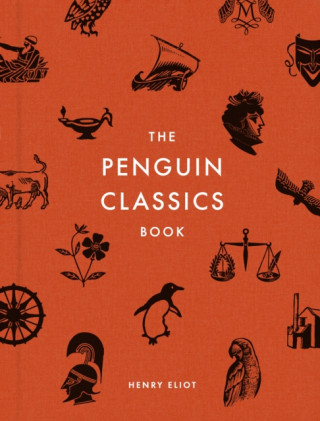
The same logic applies to publishing and mass culture. One of the clearest modern examples is Penguin Books. Penguin did not treat literature as a sacred relic reserved for initiation, nor did it flatten it into disposable entertainment. It applied industrial-grade craft to meaning: clear typography, standardized formats, editorial discipline, honest pricing. Literature was made usable. Meaning survived because it was carried by craft, not by intimidation or prestige.
This matters because symbols that endure tend to follow the same rule. Consider the penguin.
The penguin is not a classical archetype. It is not a god, a hero, a king, or a monster. And yet it keeps reappearing in culture, across genres and decades, carrying serious themes without stumbelling under them. The nihilist penguin. The curious penguin. The penguin who gets lost. The penguin who steps away. The penguins who endure together. The penguin who walks alone.
What stays consistent is not the plot, but the permission. The lone penguin walking apart from the group is protected deviation.
Across many cultures, the penguin is reframed in the same narrative configuration. Penguins are allowed to ask questions without being punished for it. They are allowed to step aside without becoming traitors. They are not crowned, and they are not destroyed. The group survives, and the individual lives. Not as a conqueror, not as a martyr, but as a witness.The group survives by cohesion, one penguin is permitted to see the edge of the world. This craft, disqualifies the classical tragedy of religious exile or heroic rebellion. So no one can really follow that penguin. The group is necessary for the survival of the species, the deviation is allowed for its thrive in perpetuity.
This is not accidental. Penguins occupy a safe symbolic bandwidth that cannot be occupied with a human archetype. They are formal without authority, upright without dominance, disciplined without grandeur. They belong to the edge, the cold, the margin, yet they move in systems, in rhythm, in structure. They carry order without mythology.
That is why they can host existential questions without triggering ideological defense. If you put this story on a lion, it becomes power. On an eagle, sovereignty. On an elephant, it is weight. On a human, it is ideology. But on a penguin, it remains legible.
This is also why penguins can be placed where they do not belong geographically without breaking the story. A penguin in Greenland is not a zoological mistake, it is a semiotic declaration. There are no penguins in Greenland, which means the image is not about nature or realism. It is about position. Origin and edge. Group and deviation. A figure carried into a frame not to rule it, but to approach a limit, without being destroyed by it.
The recurring storyline matters: the system holds. The deviation is permitted and protected. No fallout. This is how memory is carried, and craft perfected through generations and why some symbols are being reused.
That is not a myth running wild. Penguins are crafted narrative instruments that allow culture, again, explore autonomy without rebellion, meaning without transcendence and deviation without collapse.
Craft beats myth again, by engineering a safe container for the correction of the society that risks its existence.
Craft has no interest in theatre as art without meaning. It asks quieter, more durable questions. Does this work? Under what conditions does it fail? Who maintains it? What are the costs of misuse? What happens when it breaks?
So yes, Disney knew what it was doing, and so did those who placed penguins in specific places, including the Ministry of Security and Defense. Because the culture that can hold deviation secures its doctrine
These questions do not drain meaning from culture. They anchor it, they check surroundings, triggers, fears, errors.
Because myth that survives craft becomes something mature: orientation rather than possession. A background compass rather than a commanding voice. It remains available without becoming compulsory.
When craft disappears, myth turns feral. It grows louder, more moralizing, more fragile. It cannot tolerate scrutiny because scrutiny would reveal the absence of structure beneath it. This is why mythic inflation is so often accompanied by aggression. It senses its own hollowness.
Craft never needs to shout.
This is why real mastery rarely looks glamorous. It looks like editors refining language, engineers checking tolerances, restorers cleaning layers of distortion from old surfaces so original form can breathe again. Cultural hygiene, not cultural conquest.
The civilizations that last are not the ones with the most intoxicating stories. They are the ones that kept story answerable to work.
So the principle holds, quietly and stubbornly:
Craft beats myth by giving it a body that can stand and not by denying its meaning.