
Under the Dome: Milano Cortina 2026
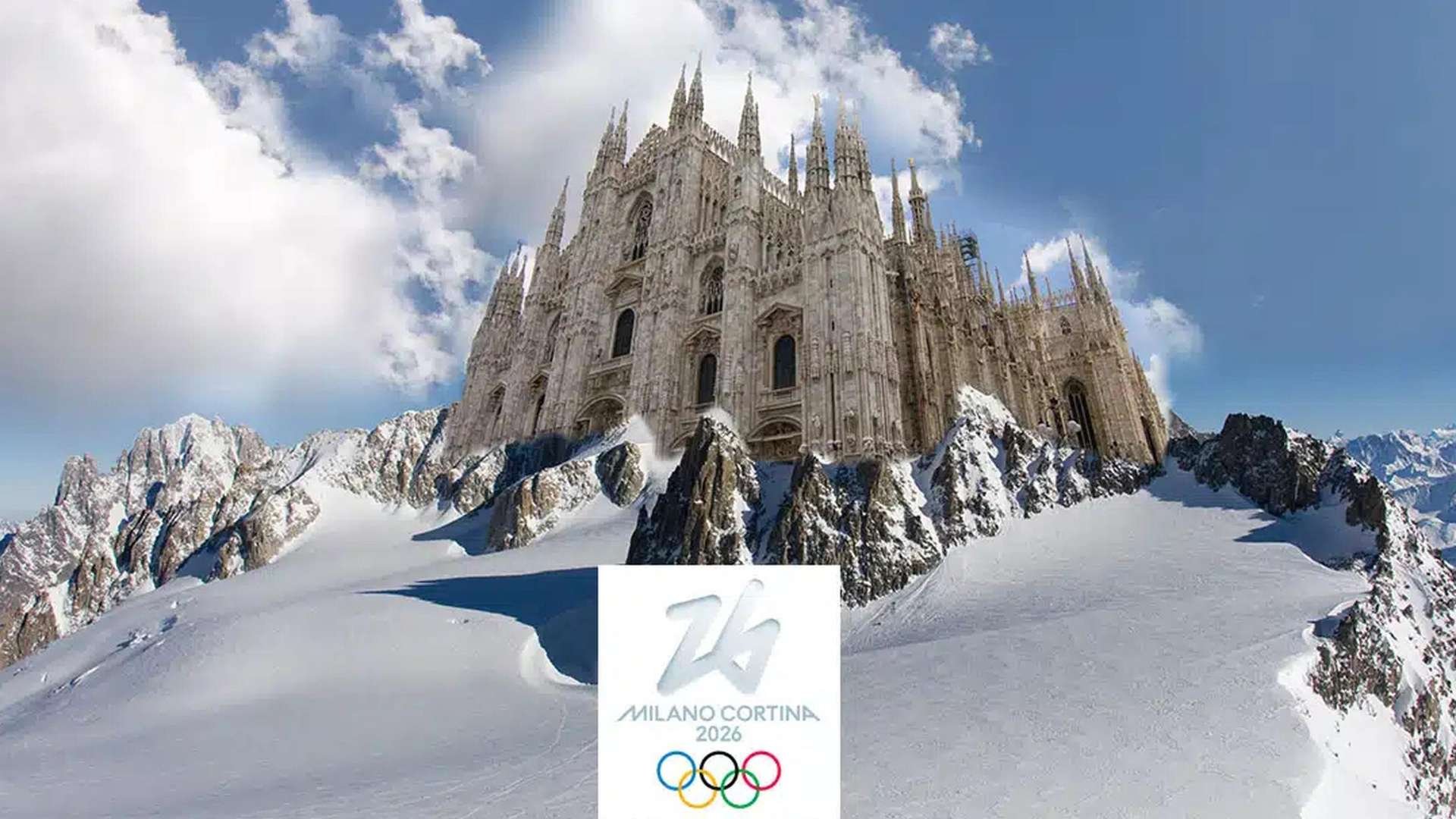
When the Olympics Quoted Myth in the Italian Style
Milano Cortina 2026 did something very Italian and very controlled. From Dome acoustics, meaning clear, not screamed, Arch and fire and ice wheel, as law and human made light, Spiral, open-ended, like a time with exits, not hypnosis, and the Conductor figure, measure, tempo, restraint.
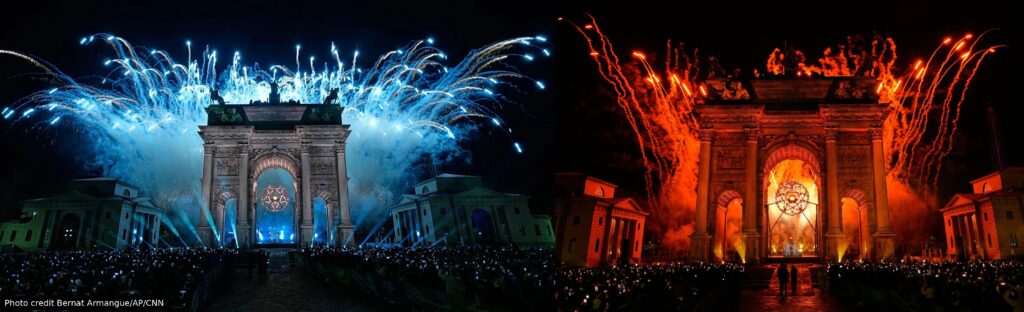
The opening ceremony of Milano Cortina 2026 did not try to invent a new language. It did something rarer and, in the current climate, far more difficult: it spoke an old language correctly, with restraint, measure, and an almost stubborn refusal to intoxicate its audience. In a global context addicted to spectacle, catharsis, and instant transcendence, Italy chose architecture over enchantment and quotation over possession. The result was not coldness, as some might to say, but composure.
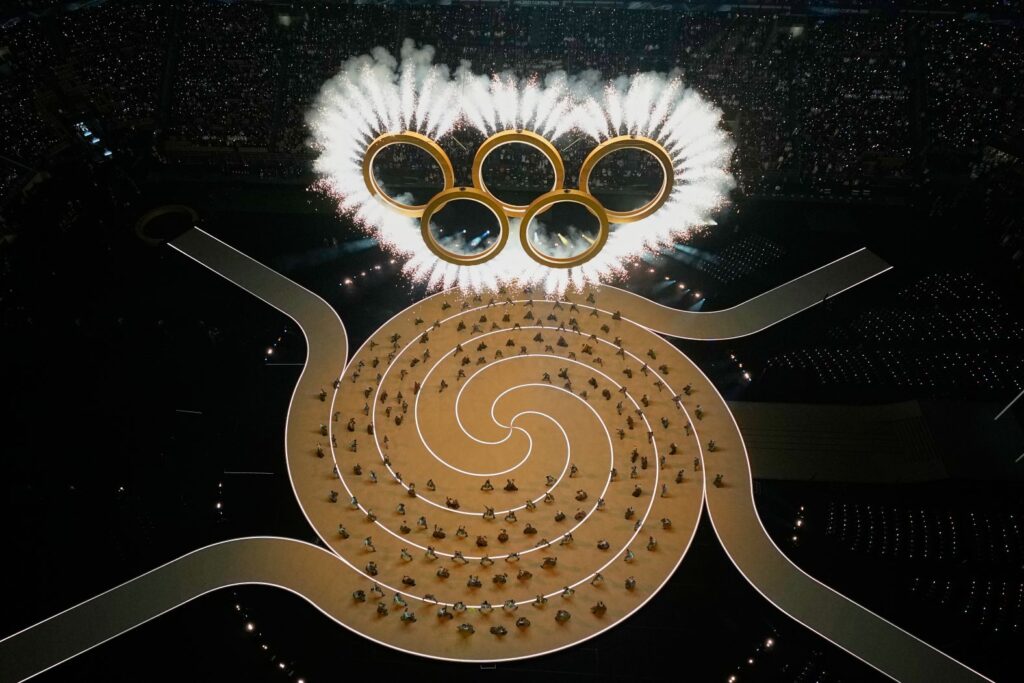
Under a dome. Not in the sense of enclosure or control, but in the classical sense: a space designed to hold resonance without letting it dissolve into noise. Domes are not just decorative. They are instruments. They discipline sound, light, and movement, making excess immediately visible and imbalance impossible to hide. Under a dome, everything counts. Every gesture carries weight. Every symbol must behave. Some behave like in the Paris ceremony in 2024, some behave like In Italy 2026. A clockwork timeline.
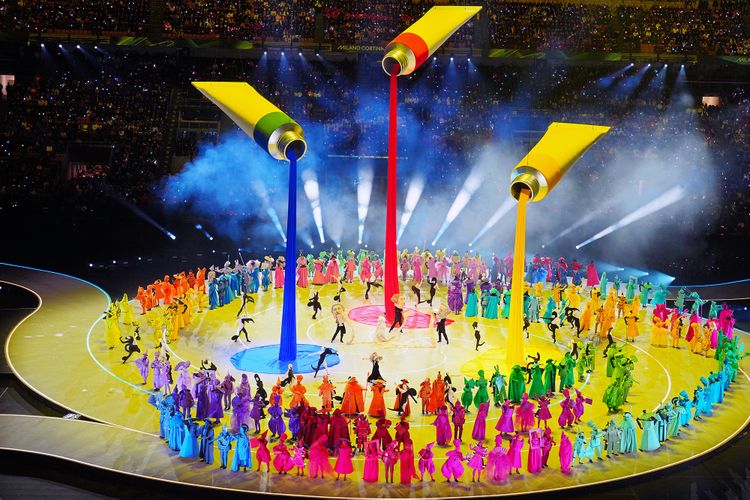
This is where many misread the ceremony. They saw familiar references, echoes of Game of Thrones, the circular eye-moon of Star Wars, the disciplined magic of The Sorcerer’s Apprentice, the vigilant eye from The Lord of the Rings, and assumed a mash-up, a borrowing driven by cultural laziness. In fact, what was happening was closer to a citation. Italy was not summoning myths; it was placing them on the table, in full view, and subjecting them to law.
Take the circular fire element framed by the arch. In another context, this would have been allowed to drift toward prophecy or menace, an all-seeing presence hovering above the crowd. Here, it was lifted by human hands, passed deliberately, framed by Roman geometry. The message was unmistakable: power does not descend, it is made and light does not possess, it is carried forward by one another. The circle watched, but it did not speak. Awareness was present, but it was not enthroned.
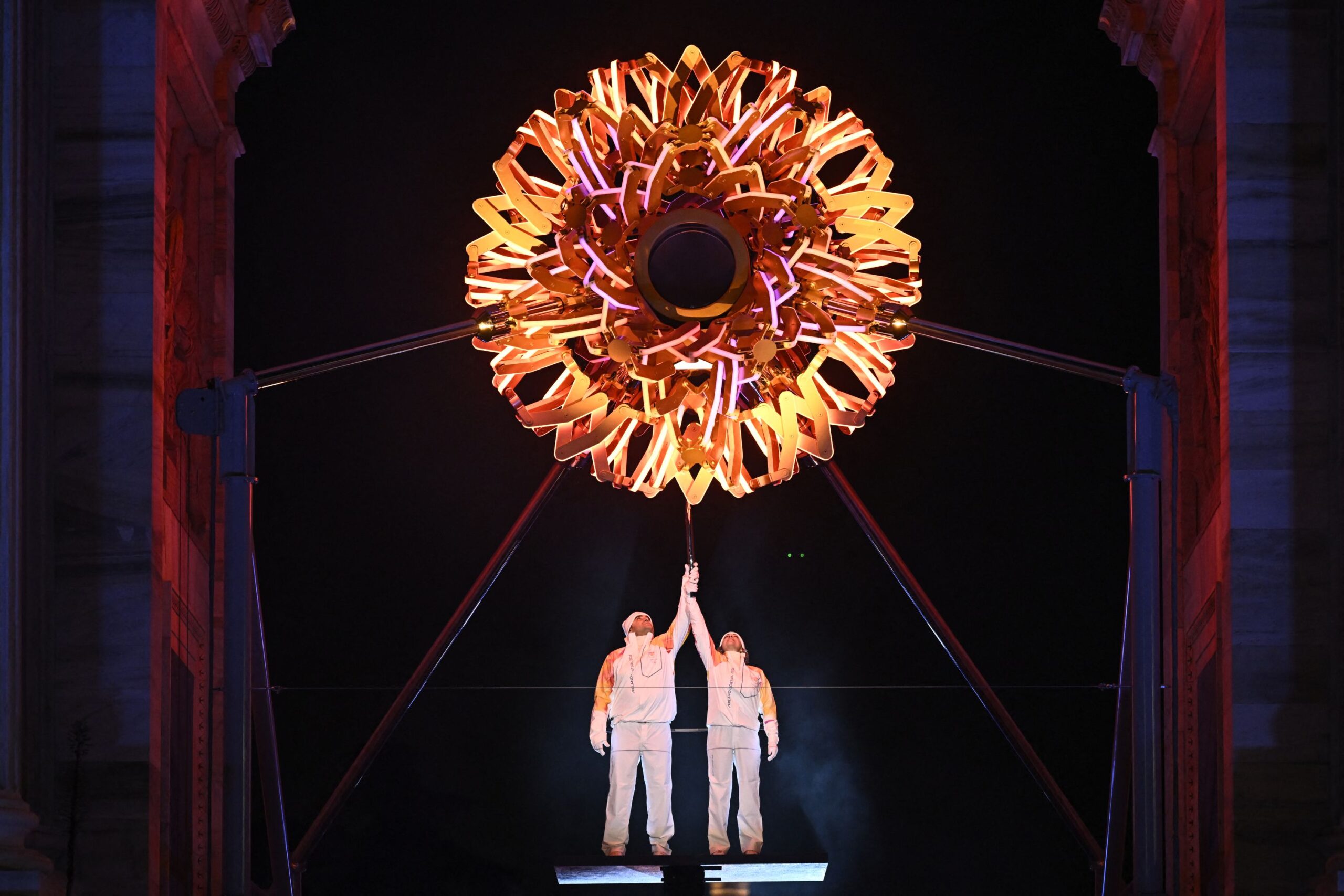
The arch itself mattered more than the fire. Arches are not mystical structures; they are legal ones. They mark passage, jurisdiction, continuity. By placing the most symbolically charged elements beneath an arch, the ceremony made a precise statement: meaning operates within form, not beyond it. There would be no ecstatic breach, no tearing of the veil, no promise of salvation through spectacle. What you saw was what you got, and what you got was enough.
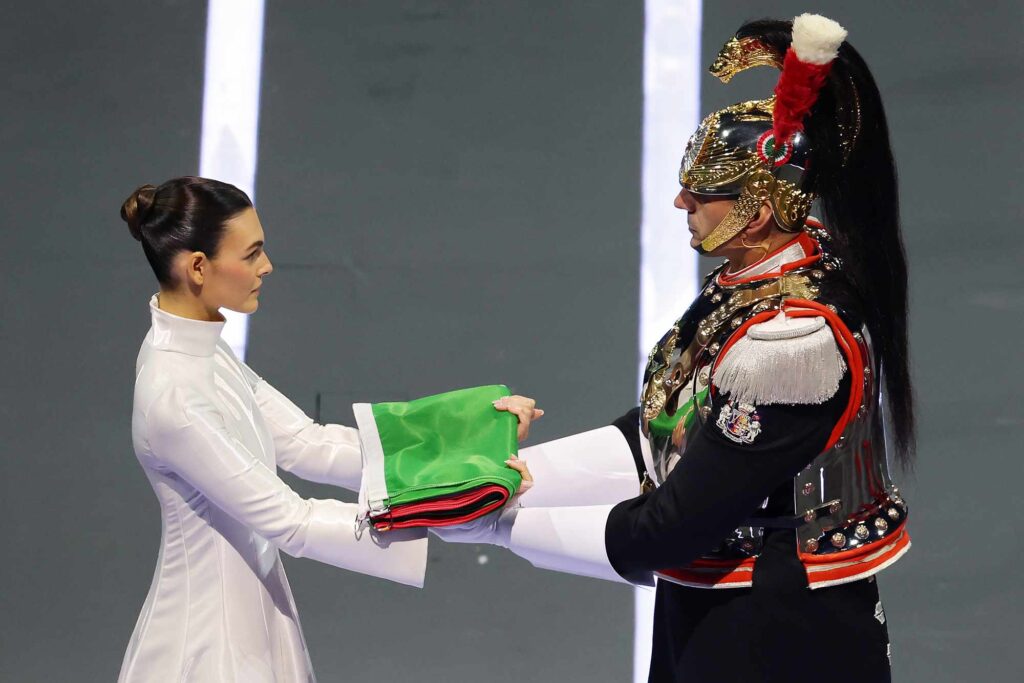
The winged conductor figure was another point of confusion for viewers trained to read wings as transcendence. Here, the wings did not signify escape. They signified guidance. The baton disciplined stage and time. Shadows obey to order. This was not an angelic descent but a Renaissance gesture: allegory in service of order. The conductor worked with times craft that has made its mark in history. From design, literature, music. Movement followed measure. Energy followed tempo. Nothing ran away from itself.
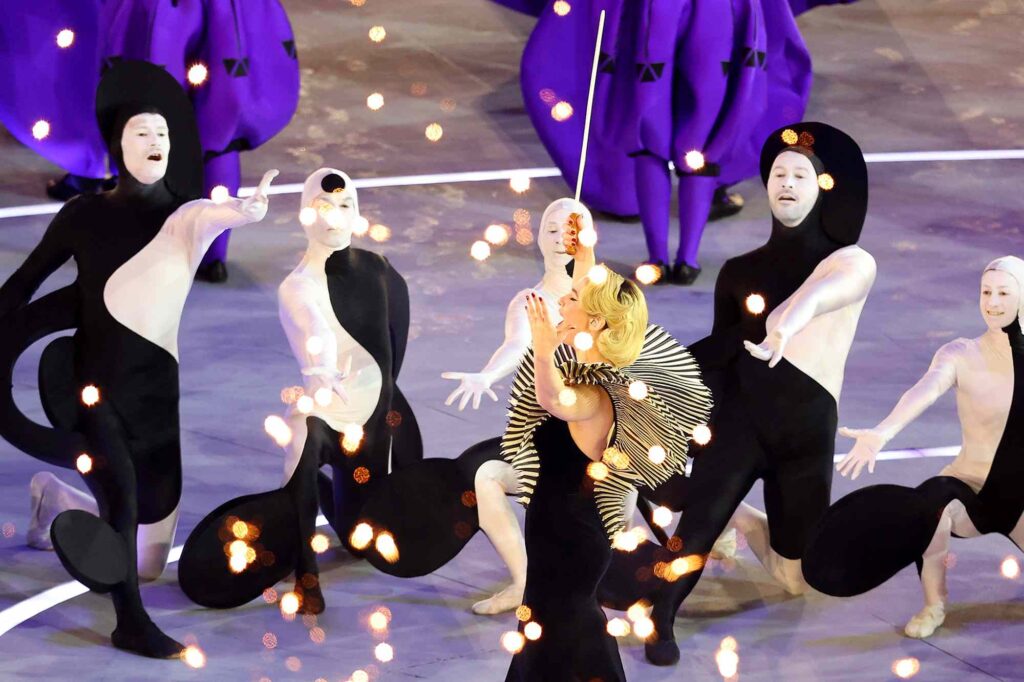
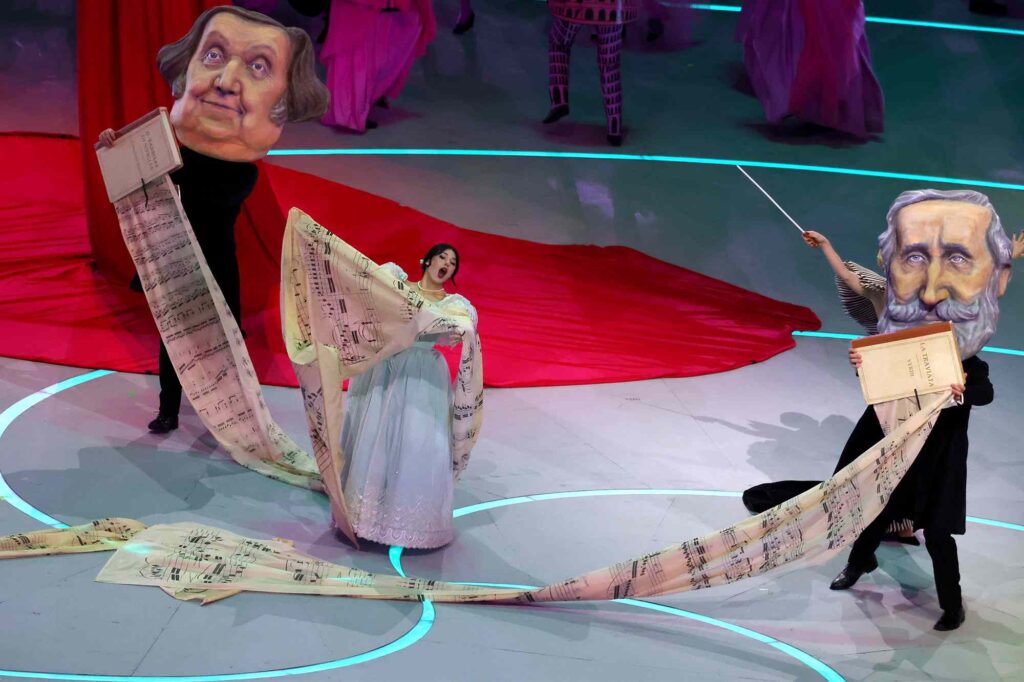
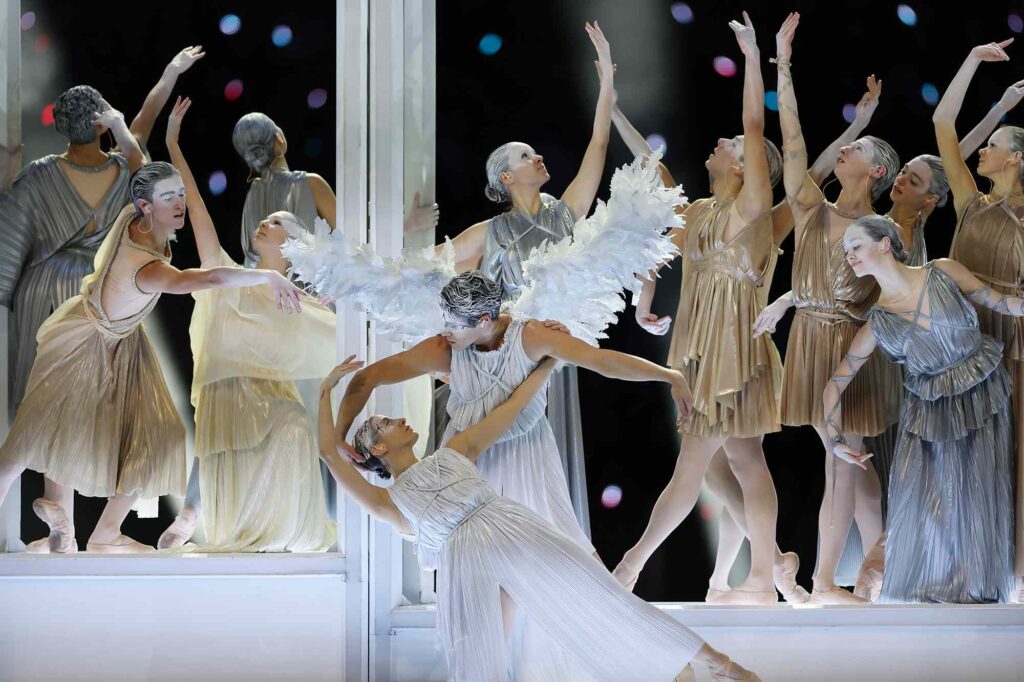
Behind her, the massed performers formed a chorus in the classical sense, not a crowd to be absorbed into emotion, but a collective holding memory. In ancient dramaturgy, the chorus does not decide; it remembers. Decision belongs to individuals, but continuity belongs to the many. That distinction was preserved with care. No one dissolved into trance. No one was elevated into prophecy. Everyone had a place, and the place held.
Perhaps the most telling choice was the tone. There was no attempt to induce tears, no orchestral swell engineered to bypass thought, no narrative of trauma redeemed through fire and light. This refusal matters. In recent years, global ceremonies have leaned heavily on emotional saturation, using suffering and redemption as accelerants to force a sense of unity. Milano–Cortina declined that path. It did not deny difficulty; it denied hysteria. It chose adulthood over catharsis.
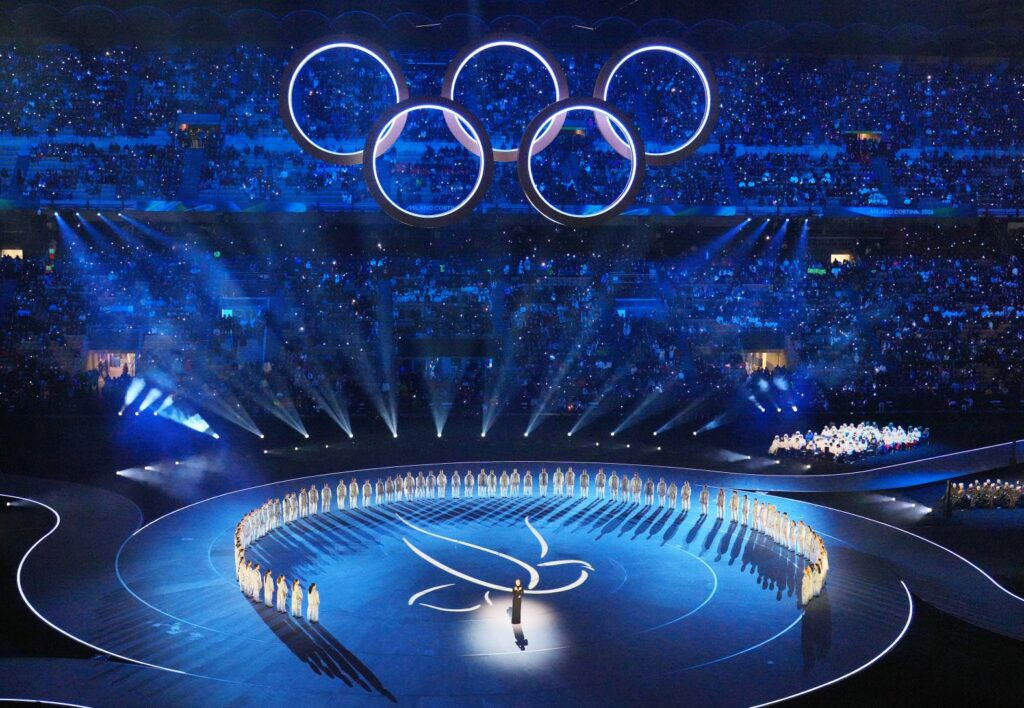
That is why the ceremony felt “quiet” to some and deeply stabilizing to others. Quiet does not mean empty. It means load-bearing. The silence between gestures allowed symbols to remain symbols instead of mutating into demands. Nothing asked the audience to believe. Everything asked them to recognize. Into peace, calmness, elevated order of good taste, elegance and sound instead of noise.
The mythic quotations worked precisely because they were bounded. Game of Thrones contributed its visual grammar of power as burden, stripped of romance. Star Wars contributed the image of immense technological force, disarmed of voice. The Sorcerer’s Apprentice offered a warning about uncontrolled energy, answered here with discipline. The Lord of the Rings lent its vigilant eye, but without a dark will behind it. These myths were not reenacted; they were corrected.
Under the dome, amplification did not distort. It clarified. Strong frequencies became audible, but they did not take over the system. This is an important distinction in an age that confuses volume with truth. The ceremony demonstrated that amplification without structure leads to chaos, while structure without amplification leads to irrelevance. Milano–Cortina showed a third option: resonance without possession.
What Italy offered the world was not a vision of the future, nor a lament for the past. It offered continuity as a discipline. Culture, it reminded us, is not a hypnosis on passive spectators. It is an architecture where everyone enters, knowing that walls exist for a reason and that freedom, to last, must accept form.
In times of chaos, vortex takes everything into the void. Discipline and unity, where everyone understands the perils, can walk you safely cross the vortex.
Under the dome, nothing broke loose. Nothing needed to. And that, in 2026, may be the most radical statement of all.
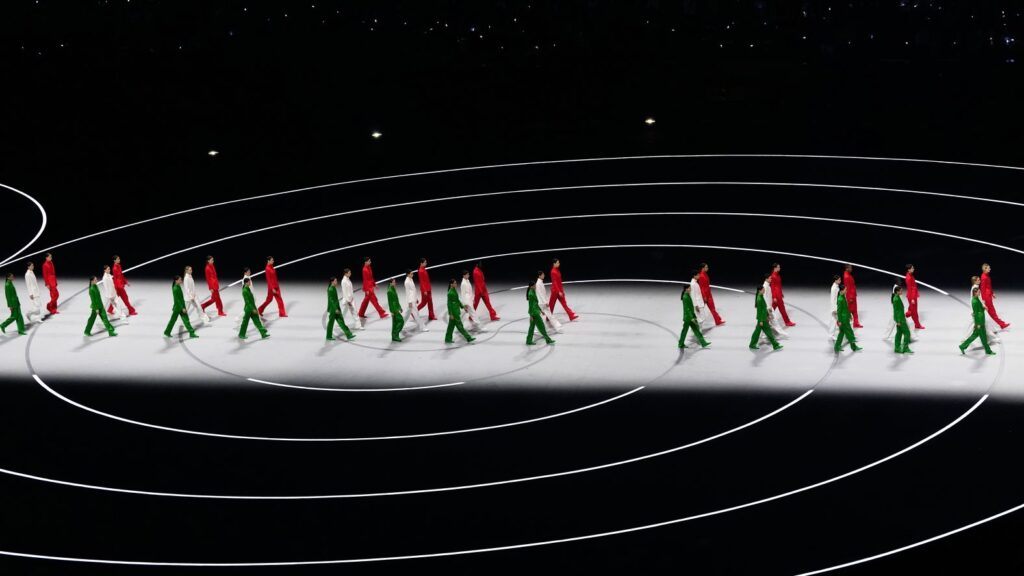
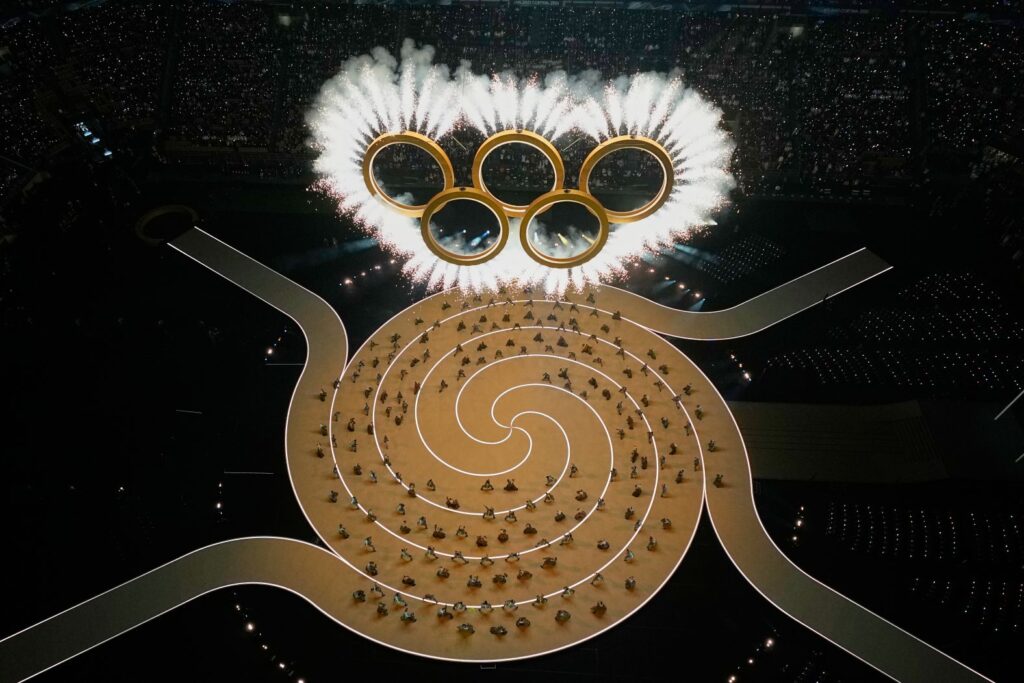
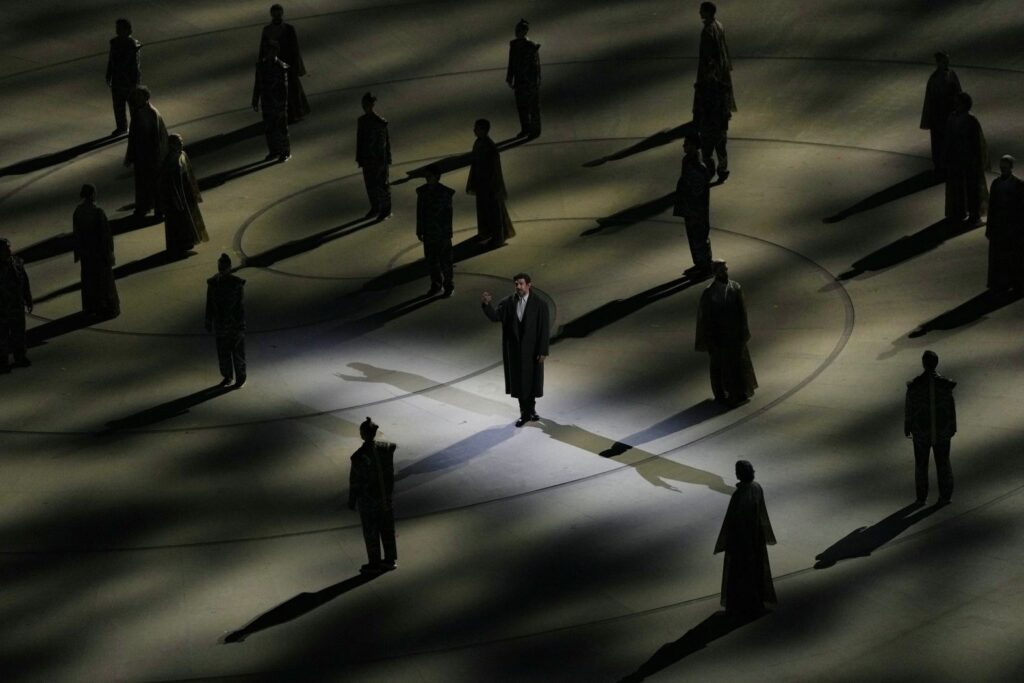

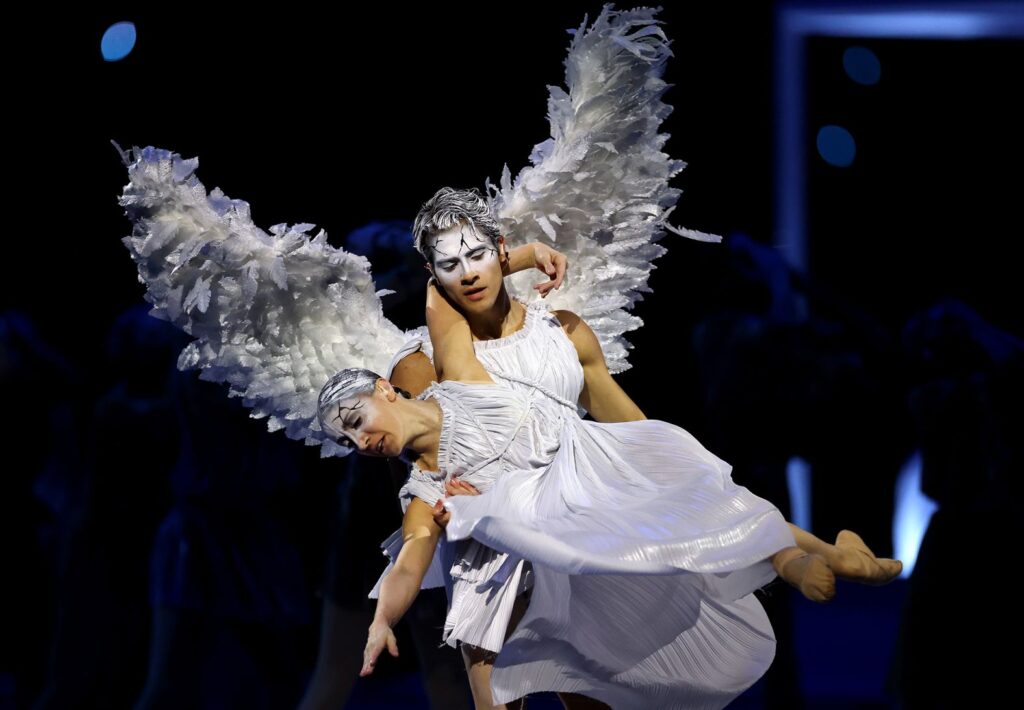
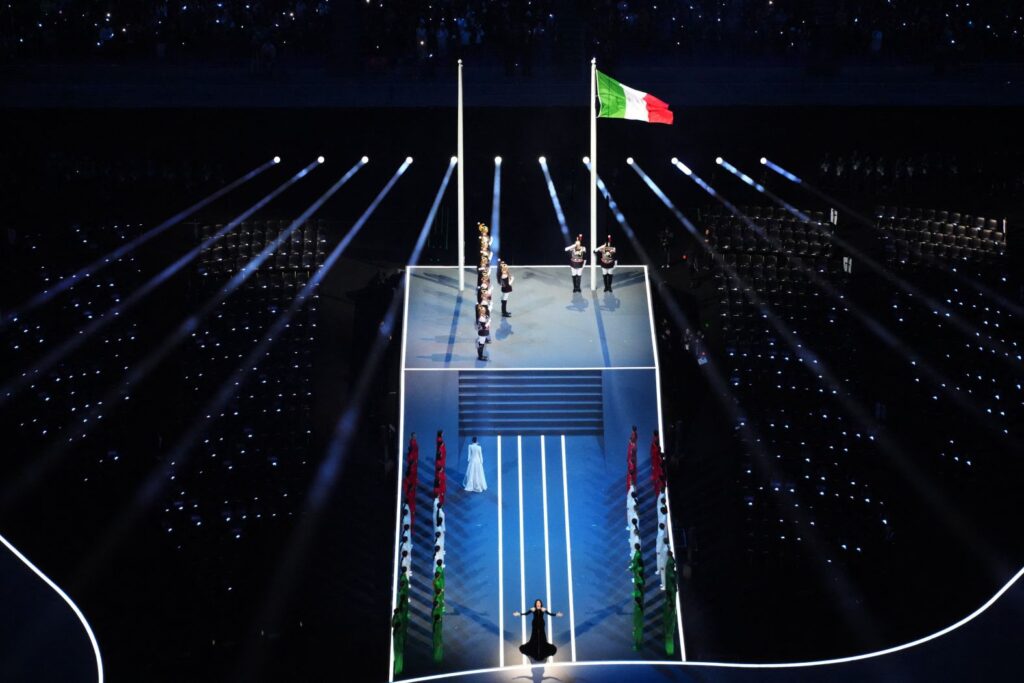
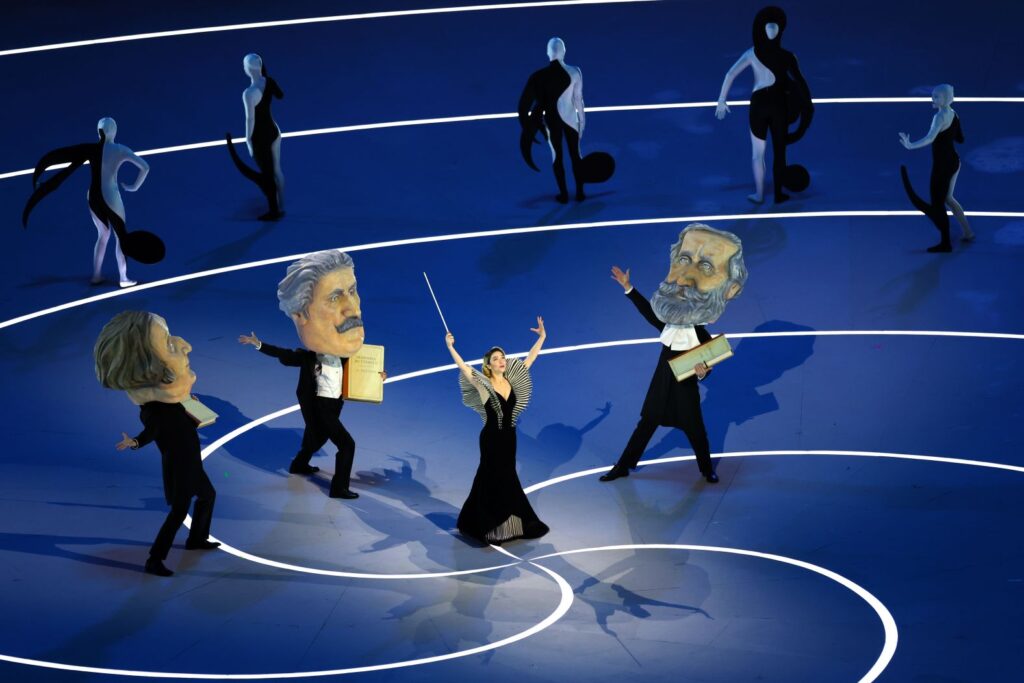
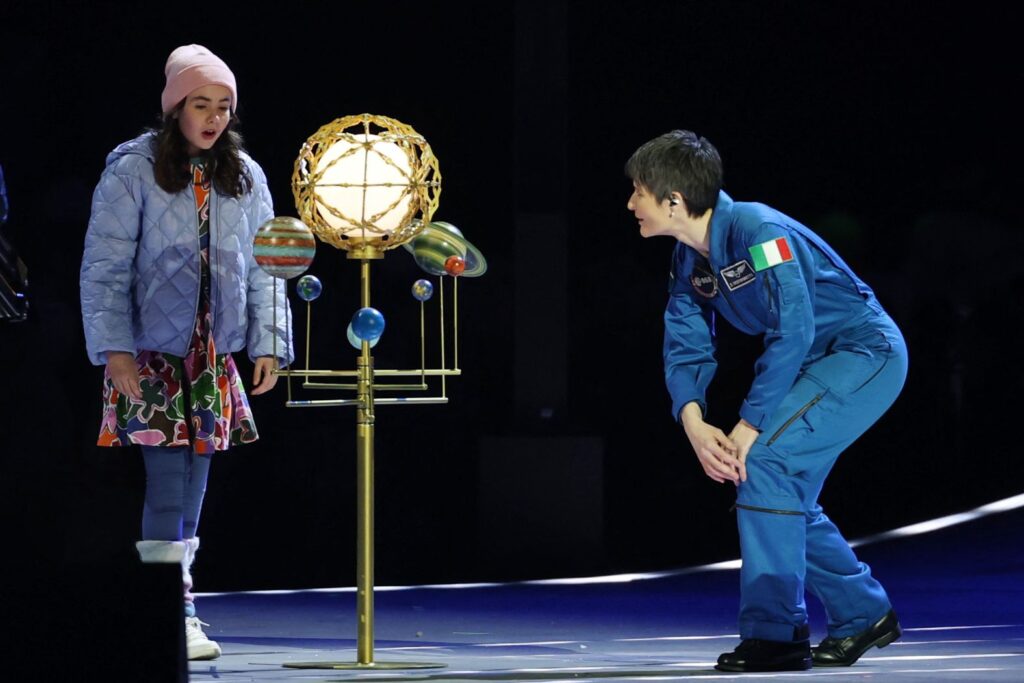
Photo credit Getty/CNN