
Humans as a Warehouse for Uncertainty
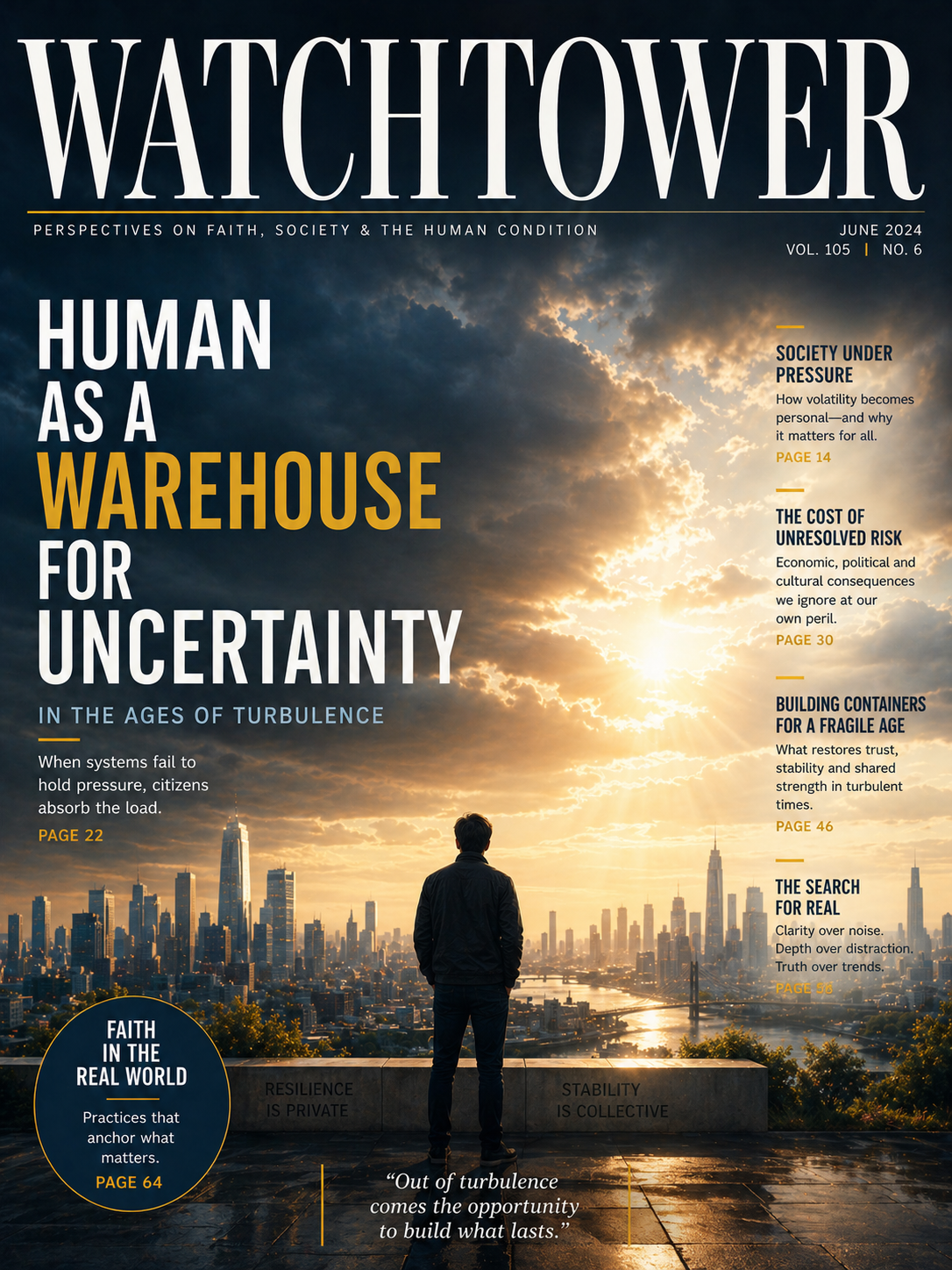
In an age of permanent alerts, fractured institutions, unstable markets, endless commentary and delayed truths, the modern individual is increasingly treated as a warehouse for uncertainty. Risks once absorbed by states, employers, churches, families or coherent communities are now transferred downward into the private nervous system of ordinary people. What was once managed structurally is now expected to be managed emotionally. The citizen must remain productive amid volatility, optimistic amid contradiction, flexible amid erosion, and calm while carrying burdens that no single person was designed to hold alone.
This transfer has deep social consequences. When millions of people become storage units for unresolved pressures, societies begin to show symptoms that are often misdiagnosed as purely psychological or moral failures. Attention fragments, trust declines, patience shortens and relationships weaken under invisible load. Public discourse becomes reactive because people already saturated with uncertainty have little remaining capacity for nuance. In such conditions, outrage becomes easier than reflection, cynicism easier than participation, withdrawal easier than solidarity.
Economically, the warehouse model creates exhausted workers and timid consumers. People who cannot predict tomorrow delay families, homes, investments and long-term commitments. They become cautious not from lack of ambition, but from prolonged exposure to instability. Innovation suffers when survival consumes imagination. A society may appear digitally active while strategically frozen underneath.
Politically, uncertainty stored in citizens becomes combustible material. Populists, conspiracists and theatrical actors thrive where institutions fail to metabolize complexity. They offer emotional certainty in place of structural competence. The promise need not be true; it only needs to feel relieving. Where systems do not process anxiety responsibly, demagogues will harvest it.
Culturally, the burden produces ironic detachment. Humor becomes defense, false identity becomes armor, distraction becomes medicine. Communities lose rituals of reassurance and replace them with algorithms of stimulation. People remain connected yet unsupported, visible yet unseen, informed yet disoriented.
A serious society therefore cannot ask endlessly for resilience while refusing to rebuild containers for shared risk. Stability is not the enemy of freedom; it is often its precondition. Functional institutions, credible leadership, predictable rules, meaningful work, trustworthy media and local community bonds are not luxuries. They are the social architecture that prevents citizens from becoming warehouses of unresolved fear.
The question of our era is not only how much uncertainty exists, but who is forced to store it. When too much turbulence is privatized, private pain becomes public disorder. A civilization that wants calm streets, productive economies and sane politics must stop outsourcing systemic volatility into individual hearts and minds.